Bones are often treated as Halloween imagery, but that is only one reading of them.
Long before seasonal retail, skeletons appeared in art, science, religion, tattooing and subculture. Their staying power comes from the fact that anatomy is both universal and symbolic.
The graphic is human before it is macabre
A ribcage belongs to every body. That makes it instantly recognizable across language, trend and brand identity. The image can feel dark, clinical, beautiful or confrontational depending on how it is presented.
Seasonality comes from context
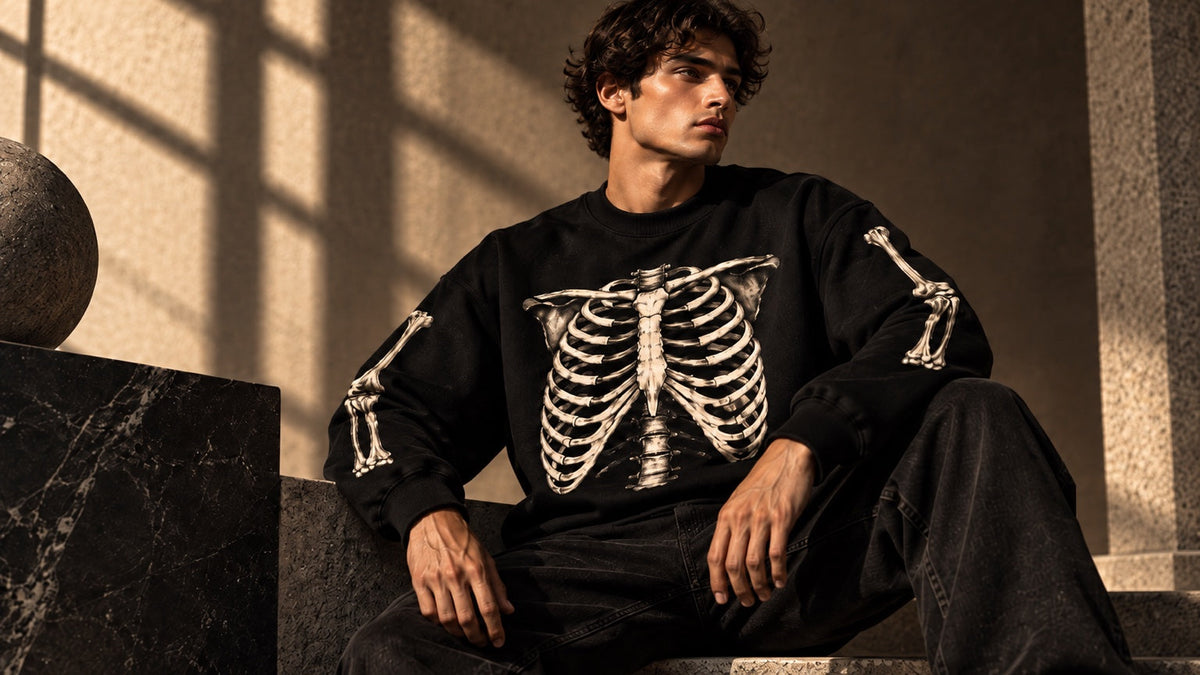
Orange accents, novelty lettering and costume styling push bones toward Halloween. A monochrome palette, substantial silhouette and restrained outfit move the same imagery toward everyday fashion.
Streetwear has always borrowed from symbolic imagery
Military graphics, collegiate type, religious references, tattoo motifs and anatomical drawings have all moved in and out of streetwear. What survives is usually imagery strong enough to carry meaning without explanation.
Why anatomy works especially well on garments
The body underneath provides a natural placement system. Ribs can sit over the chest; arm bones can follow sleeves. That relationship gives anatomy something most random graphics do not have: a built-in connection to the wearer.
The Anatomy Crewneck — Heavyweight treats bones as that permanent visual language—not as a one-night costume reference.